

COndition
Common Causes of Sciatica
Sciatica occurs when the sciatic nerve, the longest and largest in the body, is pinched. Here are some common causes:
Piriformis Syndrome
This is a condition in which the piriformis muscle, located in the lower spine, compresses or irritates the sciatic nerve. This can cause pain, numbness and tingling sensations that travel down the back of your leg.
Spinal Disc Herniation
A herniated disc occurs when the spongy material between the vertebrae in your spine bulges out of place, pressing on the sciatic nerve. This can cause pain, numbness and tingling that radiates down the back of your leg.
Spinal Stenosis
Spinal stenosis is a narrowing of the spinal canal that can occur as we age. As the canal narrows, it can put pressure on the sciatic nerve and cause pain, tingling and numbness in your leg.
Spondylolisthesis
This occurs when one vertebra slips out of place over another vertebra, placing pressure on the sciatic nerve. This can cause pain, numbness and tingling in your leg.
Trauma
A traumatic event such as a car accident or fall can cause damage to the spine that results in sciatica symptoms.
Pregnancy
As the uterus grows during pregnancy, it can put pressure on the sciatic nerve, resulting in pain and numbness. This is a common condition during pregnancy and usually resolves after childbirth.
Our Therapists and Fees
Principal Osteopath
-
First Appointment (45 Mins)
£85 -
Return Appointment (30 Mins)
£66
Senior Osteopath
-
First Appointment (45 Mins)
£75 -
Return Appointment (30 Mins)
£60
Physiotherapy
-
First Appointment (45 Mins)
£68 -
Return Appointment (30 Mins)
£56
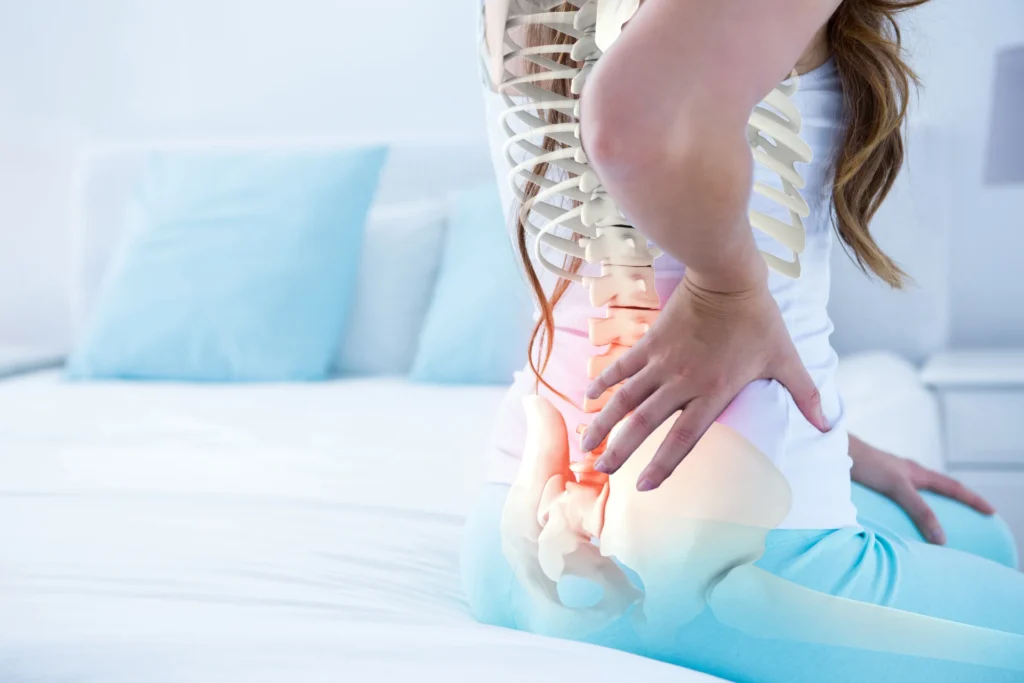
Sciatica Explained
Sciatica is a condition caused by compression or irritation of the sciatic nerve, which runs from your lower spine down the back of each leg. Symptoms may include pain, numbness and tingling sensations that radiate out from the lower back and down through one or both legs. Sciatica can be quite painful and debilitating.
The sciatic nerve sends signals to and from the legs, allowing you to move them freely. It also carries sensory information about touch and temperature back up to the brain.

How Does an Osteopath or Physio Treat Sciatica?
An osteopath uses manual therapy techniques to treat sciatica. Osteopathic treatments can include soft tissue manipulation, joint mobilisation, and stretching exercises to reduce pressure on the sciatic nerve and alleviate pain. Your osteopath will also provide advice about posture changes and lifestyle modifications that can help you manage your symptoms more effectively. The goal of osteopathic treatment for sciatica is to reduce pain, improve mobility and promote overall well being.
For people living with chronic sciatica, osteopathy can also help to prevent further episodes of pain or discomfort by identifying possible factors that may be contributing to the condition in the first place. By addressing these underlying issues, your osteopath can help you manage sciatica more effectively.
Generally speaking, most people who receive treatment for sciatica experience a noticeable reduction in their symptoms within four to six weeks. However, results may vary depending on the underlying cause and individual circumstances. Your osteopath will monitor your progress throughout treatment and make adjustments as needed.
Here at Forté Physical Health, we also offer specialised Physiotherapy for long-term rehabilitation.
How Long Does It Typically Take to Recover From Sciatica?
The length of time it takes to recover from sciatica depends on the underlying cause and individual circumstances. Generally speaking, most people experience a noticeable reduction in their symptoms within four to six weeks with treatment from an osteopath. However, recovery times may vary depending on the severity of your condition and other factors. Your osteopath will monitor your progress throughout treatment and make adjustments as needed.
Overview
Treatment Summary
A clear summary of your treatment plan, including recommended therapies, goals, progress, and personalized care designed to support your recovery and overall wellbeing.
Treatment
The osteopath will then use gentle manipulation, stretching and massage to help reduce pain and stiffness.
Number of Visits
In some cases, a single visit may be enough to reduce pain and discomfort. In more severe or long-term conditions, a course of treatments may be necessary to achieve lasting relief.
Rehabilitation
We will also provide advice on lifestyle changes, such as exercise or ways to improve posture, that can help support recovery.
Treatment
The osteopath will then use gentle manipulation, stretching and massage to help reduce pain and stiffness.
Number of Visits
In some cases, a single visit may be enough to reduce pain and discomfort. In more severe or long-term conditions, a course of treatments may be necessary to achieve lasting relief.
Rehabilitation
We will also provide advice on lifestyle changes, such as exercise or ways to improve posture, that can help support recovery.
Testimonials
Patient Experiences That Speak for Themselves
Trustindex verifies that the original source of the review is Google. I saw Chris a few weeks about with a running gait appt. I’m glad I did, I got a bit lost over running and how to improve what plan to do etc. Chris looked at my running technique, listened to what I’m doing and looked at my Garmin results too. I walked away with a great running plan and have enjoyed starting it the last few weeks. Glad I booked the appt and got what I needed to improve running.Posted on GoogleTrustindex verifies that the original source of the review is Google. Very helpful and painful but fingers crossed the treatment heals injury quickly.Posted on GoogleTrustindex verifies that the original source of the review is Google. I had not exercised properly for several years and struggled with frequent back pain that once in spasm, persisted for 4-8 weeks each time. Enough was enough! I saw Chris regularly for 3 months and joined a gym. It’s now 8 months later and I’m still using what I learnt with Chris in the gym 4/5 days a week. His guidance inspired me to keep going. And I feel so much better. I deliberately held off writing a review until now so I could be honest on the genuine impact it’s had. I haven’t been to Forte or had any contact with them for 4 months and still felt compelled to write this review of their fantastic service! Occasionally, my back still does go into spasm BUT, it’ll be because I’ve slightly overdone it in the gym or been working in the garden all weekend. The best bit being, it now only lasts 1-2 days instead of weeks! I would highly recommend Forte to anyone with an injury, discomfort or needing a change!Posted on GoogleTrustindex verifies that the original source of the review is Google. Am under the care of 'Ash' the physio, and can't thank her enough for how she is helping me with my condition. I have been treated and advised by her for three week now, and my pain symptoms are almost non-existent. She comes across as very professional and has an extremely pleasing manner. Very, very knowledgeable. Thank you Ash.Posted on GoogleTrustindex verifies that the original source of the review is Google. Welcoming, professional and caringPosted on GoogleTrustindex verifies that the original source of the review is Google. Really great initial session with Chris. He knew exactly what my issue was and how to fix it. He’s given me some good exercises to help too so very useful!Posted on GoogleTrustindex verifies that the original source of the review is Google. I visited Chris with a bad back sprain which I got instant release from and came away with some exercises to help heal my back and hamstring. I felt I had an extensive examination with an excellent outcome. He understood my problem and gave me good instructions on how I can go back to the gym and care for my backPosted on GoogleTrustindex verifies that the original source of the review is Google. I have been going to see Chris for many years each time that I have injured myself. I fell backwards and injured my back last December. I saw Chris and, after a few weeks, he suggested that I saw Aishwarya, a physiotherapist who also does dry needling. I am back at the gym and am able to walk much further than I could initially. They are extremely knowledgeable, explain what they are doing and why and very friendly and polite. I would recommend Forte Physical Health highly.Posted on GoogleTrustindex verifies that the original source of the review is Google. Very friendly and professional staff that really helped with a calf strain. There's on-site parking which is very handyPosted on Google
Let’s take action to treat your Sciatica
Chris Branch
Principal Osteopath
We understand that taking the first steps to becoming pain free is always a big decision.
I’d like to personally reassure you that every case is dealt with respectfully, transparently and with care.
Please book your initial appointment and our knowledgeable practitioners will be able to guide you toward feeling great again.


Private Health Insurance Covered
Osteopathy & Physiotherapy are often covered by private health insurance, but in some cases it is an additional element of the policy or you may need to get a referral from your GP or approval in advance. It is best to contact your insurer and ask about the details and process for your particular policy. We can invoice direct to the insurer if appropriate.